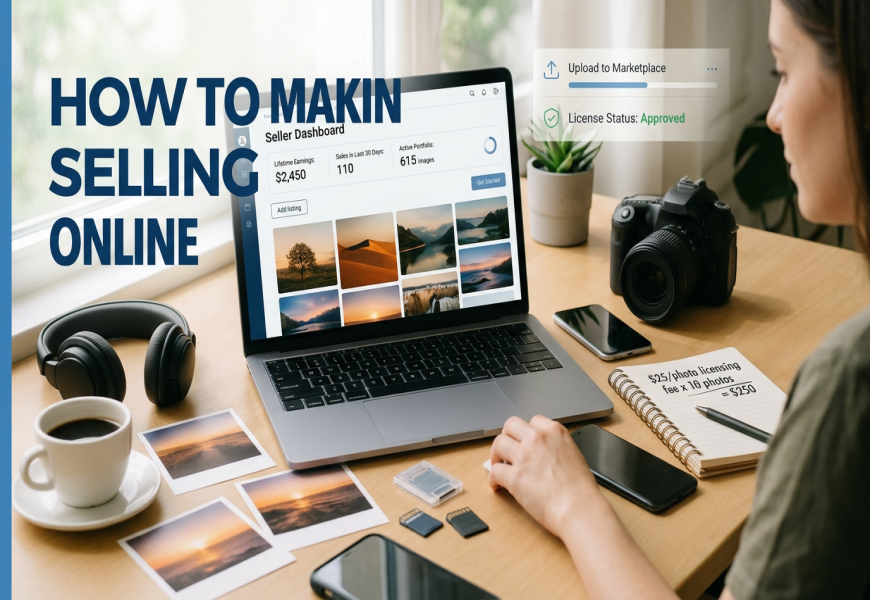
How to Make Money Selling Photos Online: A Beginner’s Guide
How to Make Money Selling Photos Online 2026
In the modern digital multimedia landscape, visual assets serve as the foundational architecture for global advertising campaigns, corporate branding frameworks, and digital content publishing channels. From multi-national e-commerce storefronts to high-traffic news publications, organizations spend billions of dollars annually to secure high-resolution imagery that captures consumer attention, builds brand trust, and drives digital conversions. This continuous demand has transformed photography from a traditional artistic hobby into a highly scalable online revenue stream. Learning how to make money selling photos online allows creative professionals and modern smartphone enthusiasts to build an expansive portfolio of digital assets that generate compounding passive cash flows globally.
Bypassing crowded entry-level tiers and establishing a highly profitable online photography business requires a structured, corporate-centric approach. Many beginner photographers struggle to generate meaningful sales because they upload random snapshots without key wording, ignore technical submission baselines, or fail to secure essential legal documentation. To scale your photography income efficiently, you must carefully analyze commercial niche demands, master metadata optimization, select highly compatible distribution channels, and systematically diversify your visual assets across multiple revenue streams. This comprehensive guide provides an explicit, data-driven roadmap to organize your portfolio, partner with elite global stock registries, build direct e-commerce storefronts, and manage your photography business frameworks safely.
💡 Industry Matrix: Global Photography Sales Platforms
To assist you in aligning your current portfolio volume with the most reputable and profitable distribution channels in the industry, review this detailed metric breakdown:
Platform Official Name | Authorized Domain URL | Initial Commission Structure | Target Buyer Segment | Primary Technical Upload Asset Requirement |
Shutterstock Contributor | https://shutterstock.com | 15% – 40% Tiered scaling based on performance downloads. | Global marketing firms, small businesses, digital publishers. | Minimum 4 Megapixel JPEG files, strict clarity tracking. |
Adobe Stock Contributor | https://adobe.com | 33% Fixed flat-rate commission per valid download. | Creative Cloud enterprise users, graphic designers. | Embedded metadata indexing, high color grading standards. |
500px Marketplace | https://500px.com | Up to 60% Royalties based on pricing configuration choices. | High-end commercial advertisers, premium print curators. | Authentic creative portraits, avant-garde lifestyle scenes. |
Smugmug E-Commerce | https://smugmug.com | Custom Pricing (You retain 85% of net print profits). | Direct art collectors, wedding clients, interior designers. | High-resolution print files, secure custom domain embedding. |
1. Mastering Your Inventory: Analyzing High-Demand Niche Sectors
Identifying Commercial Buyer Intent and Seasonal Vectors
To build a high-value photography website that Google AdSense rewards, you must shift your perspective away from pure artistic snapshots toward high-utility commercial design. Stock photography platforms operate as search-driven databases. Buyers browse these platforms looking for images that solve specific layout problems inside their advertising campaigns or corporate blogs. To maximize your sales frequency, focus your visual production loops on high-demand, evergreen commercial categories.
Evergreen topics like realistic multi-generational family interactions, authentic corporate office collaborations, modern remote workspace setups, and sustainable green technology implementations experience high search volume year-round. Additionally, track seasonal vectors by executing shoots centered around localized holiday markets, cultural festivals, or seasonal agricultural harvests three months in advance, ensuring your content is fully indexed by the time corporate marketing teams begin sourcing holiday campaign layouts.
Meeting Strict Technical Specifications to Ensure High Approvals
No matter how beautiful or creative your composition is, stock agency compliance review boards will reject your submissions instantly if they fail to meet rigorous technical baseline standards.
· Resolution Quality: Ensure your camera sensors export files that maintain a minimum resolution architecture of 4 Megapixels (ideally higher for commercial crop flexibility).
· Clarity Optimization: Shoot in raw formatting structures to preserve sharp focal definitions, pristine highlights, and even lighting environments, completely eliminating edge noise or chromatic aberrations.
· File Processing Framework: Export your final edited visual files into universal high-quality JPEG or compression-free TIFF formats.
To build professional software competence, refine your files utilizing industry-standard desktop exposure tools like Adobe Light room (https://adobe.com) or Capture One (https://captureone.com), which maintain strict pixel fidelity during batch processing.
2. The Power of Metadata: Mastering Key wording and SEO
If your photographs are not accurately indexed with high-relevance search terms, they will remain completely invisible to prospective buyers, regardless of their artistic value. Key wording serves as the absolute bridge that connects your visual asset with an active commercial buyer search. When uploading files to platforms like Adobe Stock Contributor (https://adobe.com), you must attach 25 to 50 targeted descriptive keyword tags embedded directly into the metadata files.
[Capture Raw Visual Image Asset]
│
▼
[Import into Adobe Light room for Batch Processing]
│
▼
[Embed 25-50 Descriptive Meta Keywords & Concept Tags]
│
▼
[Upload Flawless JPEG to Shutter stock or Adobe Stock Registries]
│
▼
[Search Engines Index Metadata ──► Automated Passive Sales]
Organize your keyword taxonomy systematically by utilizing a mix of explicit literal observations and broad conceptual ideas. Start with the core physical elements of the scene, such as "modern hybrid office laptop standard view." Next, layer in specific descriptive metadata details regarding the ambient environment, lighting temperature, and color schemas.
Finally, incorporate broad psychological concepts that commercial marketing firms frequently target, such as "financial security," "corporate agility," "team focus," or "creative problem solving." Utilizing specialized professional keyword aggregation tools like Keyword Tool (https://keywordtool.io) helps you discover low-competition search phrases, driving higher visibility and faster conversions inside stock asset search engines.
3. Selecting and Optimizing Your Sales Channels Methodically
Navigating Crowdsourced Microstock Infrastructure
For absolute beginners looking to secure consistent, reliable data approvals and quick sales velocities from scratch, registering on massive Microstock Agencies is the ideal entry path. Platforms like Shutter stock Contributor (https://shutterstock.com) provide access to millions of active enterprise buyers daily, offering a predictable tiered commission matrix ranging from 15% to 40% based on your annual download thresholds.
Parallel, utilize the Adobe Stock Contributor system (https://adobe.com), which integrates your portfolio assets directly into the creative design software applications utilized by millions of graphic designers worldwide, yielding a stable 33% flat-rate commission per asset download.
Launching Gated Direct E-Commerce Storefronts
To maximize your long-term profit margins and bypass platform transaction percentages completely, build a direct-to-consumer digital gallery infrastructure. Establish a self-hosted corporate website using WordPress (https://wordpress.org) paired with flexible photography themes from Smug Mug (https://smugmug.com) or professional gallery managers like Pixieset (https://pixieset.com).
These specialized photography e-commerce platforms enable you to display high-resolution digital proofs safely behind secure, automated visual watermarks. You can set custom commercial license pricing brackets—such as charging $20 for basic personal web blogs and $500 for full enterprise marketing print rights—while utilizing payment gateways like Stripe (https://stripe.com) to automate credit card verification and file download protocols around the clock.
4. Expanding Beyond Stock: Diversifying Visual Revenue Streams
Print-on-Demand (POD) Merchandising Integration
To protect your creative business from seasonal microstock fluctuations, transform your landscape or fine-art travel photos into tangible physical assets via Print-on-Demand (POD) channels. Register on highly reputable global manufacturing networks like Fine Art America (https://fineartamerica.com), Redbubble (https://redbubble.com), or Society6 (https://society6.com).
These platforms handle the entire back-end corporate lifecycle automatically: when a consumer buys your design, the platform prints your photo onto a premium canvas, apparel piece, or home decor product, manages international shipping logistics, and routes a set percentage profit commission straight to your account, requiring zero fulfillment overhead from you.
Packaging and Selling Light room Editing Assets
If you have developed a highly unique, recognizable color grading signature or professional aesthetic style in post-production, you can package that knowledge into downloadable digital assets. Build a collection of customized Light room Presets or LUTs (Look-Up Tables) designed for specific target niches—such as soft, warm tones for wedding photographers or moody high-contrast schemas for automotive bloggers. Market your preset packs for $15 to $50+ on your personal blog or e-commerce marketplaces like Etsy (https://etsy.com), providing consumers with instant digital downloads that require zero manufacturing costs.
5. Enforcing Strict Legal Compliance and Protection
Operating a legally compliant photography enterprise requires absolute discipline regarding user privacy and property tracking rights. If you upload a photograph for commercial stock use that contains a recognizable human face, an explicit corporate logo, or private architecture, you must upload a signed Model or Property Release Form.
Without these binding legal contracts, stock registries will reject your files or restrict them exclusively to low-paying news editorial categories. Use professional smartphone utilities like Easy Release (https://easyrelease.com) or templates from Model Mayhem (https://modelmayhem.com) to capture digital signatures from your subjects on-site, archiving your legal documentation safely to shield your business from compliance disputes or fine adjustments.
Frequently Asked Questions (FAQ)
1. Can a photographer successfully sell photos online using only a mobile smartphone camera?
Yes, absolutely. Modern high-end smartphones possess advanced multi-lens camera systems, high megapixel capacities, and powerful raw exposure tracking parameters that easily cross stock platform submission thresholds. Focus your energy on maintaining perfect manual focus settings, utilizing natural lighting setups, and minimizing post-processing distortion to guarantee swift approvals from stock review boards.
2. What is the average portfolio volume required to generate stable monthly passive income?
Because microstock relies heavily on transaction volume, a dedicated beginner should target an initial inventory baseline of 500 to 1,000 high-demand, keyworded images. Photographers who maintain consistent submission frequencies and scale their visual assets to 5,000+ files routinely secure stable passive earnings ranging from $500 to $1,000+ monthly as their images compound inside database algorithms for years.
3. How do you protect your high-resolution images from digital copyright theft?
When displaying your portfolio files across open public directories, social media handles, or direct e-commerce blogs, always upload compressed down-sampled images rather than raw master files. Embed a prominent visual watermark across the focal points of the canvas, utilize right-click disabling scripts on your website design layout, and register your premium commercial files with stock registries to secure automatic legal protection.
Disclaimer: The global photography industry trends, platform commission rates, asset brokerage metrics, and legal compliance structures detailed in this article are designed strictly for general educational and informational purposes. Individual financial returns vary significantly based on portfolio quality, keyword accuracy, personal consistency, and changing platform corporate policies.
Share This
Latest Blog





Online Data Entry Jobs 2026
16 Sep 2026Popular Blog